
OnyLab: applications designed to build customer loyalty and take phone orders
OnyLab: when a restaurateur-developer comes to enrich the HubRise ecosystem
Some ideas are born out of frustration. Paul's was. A software engineer, founder of OnyLab and co-founder of Burger Breton, he started from a simple observation: running a restaurant focused mainly on delivery and takeaway means thinking like an e-commerce business. And once you start thinking like an e-commerce business, you realise just how poorly the sector's data is being used.
Paul spent five years building Burger Breton with a restaurateur business partner. A profitable model, based on short supply chains (even going as far as collecting potatoes directly from the producer)...
Five years of data, campaigns and experimentation gave rise to OnyLab: a suite of business applications connected to HubRise, designed to turn dormant data into concrete action and provide restaurateurs with the additional features they need to operate more smoothly and more efficiently.
HubRise at the centre of the marketing setup
At Burger Breton, the team had adopted practices borrowed from e-commerce: unique promotional codes for each customer, finely-grained database segmentation, and campaigns targeted at specific events such as football matches, Easter or Valentine's Day.
The results were there: a 50% email open rate, and event-driven communications that could by themselves generate 10% of turnover.
These practices are common for digital operators. They remain rare in independent restaurants, not for lack of willingness, but because the data is siloed. The EPOS does not communicate with the email marketing tool or the SMS sending tool. Online orders sit in one system, loyalty data in another. To send a targeted offer, data has to be exported manually, cleaned, imported, and then the whole process repeated for every campaign: it is laborious, and yet that is still what most motivated restaurateurs do today.
This is precisely the problem that Brevo Bridge and smsmode Bridge solve.
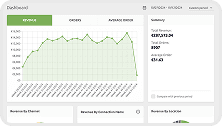
These two applications developed by OnyLab build on the data HubRise already centralises: as soon as an order passes through HubRise, whatever its origin, customer data and the associated GDPR consent are automatically synchronised to Brevo for email marketing or smsmode for SMS. Segmentation is updated in real time according to criteria drawn from actual data: order frequency, average basket value, date of last visit. The restaurateur chooses which group to target: new customers for a welcome offer, VIPs for an exclusive offer, customers inactive for more than six months for a reactivation campaign... and sends the campaign without any export or file handling.
"Restaurateurs collect data, they have loyalty programmes. And then nothing happens. There is a reason for online commerce to use CRM solutions!" — Paul, founder of OnyLab
With a read rate close to 100%, SMS complements email for high-value communications. Brevo Bridge and smsmode Bridge are two applications with independent HubRise integrations: each restaurant activates only what it needs.
Order Pad: phone orders within the HubRise flow
Even with the best web interface, the phone keeps ringing. It accounts for around 30% of orders in pizzerias. At Burger Breton, despite a very carefully designed online ordering interface, it still represented 7 to 8% of volume.
"If people call, it is not because they cannot order online. It is because they want to order by phone. If you refuse that channel, you lose 7 to 8% of your turnover." — Paul
Without a dedicated tool, phone orders fall outside the digital flow. They are written down by hand, re-entered into the EPOS, and passed to the kitchen via a different route from digital orders. They generate errors, slow down service, and do not feed customer data into HubRise.
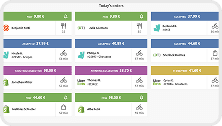
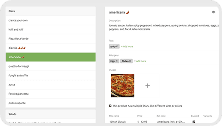
Order Pad solves this problem by integrating that channel directly into the ecosystem. The operator enters the first digits of the incoming number and the HubRise customer profile appears instantly, complete with the associated postal address and order history. The order is built from the HubRise catalogue, entirely via a touch screen, mouse, or keyboard shortcuts so it can be entered quickly during busy service. Once confirmed, it goes back into HubRise exactly like an order coming from Uber Eats or the restaurant's website, on its way to the EPOS, the kitchen or the delivery provider, with no re-entry and no break in the flow.
The phone order stops being a separate exception. It becomes a channel like any other.
The next step: synchronising local visibility
Paul is currently working on a new application focused on online presence. The issue behind it is very practical: a Google My Business listing with incorrect opening hours or an outdated menu is enough to lose a customer before they have even placed an order.
The application Google My Business Bridge will automatically synchronise key information from HubRise to Google My Business and other directories. It will also include a post-order review request mechanism. A dissatisfied customer leaves a review spontaneously; a satisfied customer does so only about once in every twenty or thirty cases. Automatically directing customers to Google after their order helps rebalance that ratio without any manual intervention.
Modular tools on a shared infrastructure
Solutions offering similar features generally start at a price point that is difficult for an independent restaurant owner to absorb, especially when margins are tight and several combined tools would be needed to cover all requirements.
OnyLab applications are available for just a few euros per month, directly within the HubRise ecosystem. Each restaurant activates only the modules it needs, with no additional development work or integration effort to manage.
This is the model that HubRise makes possible: a reliable central infrastructure on which developers with real field experience can build the missing business components at prices accessible to independent restaurant owners and small chains. In its own way, HubRise plays a role here that is similar to an app marketplace: the platform provides the infrastructure, centralises the flows, and enables players such as OnyLab to develop and then distribute connected tools that are directly useful to restaurateurs.
This openness of the HubRise ecosystem to third-party developers such as OnyLab makes it possible for solutions shaped by real operational needs to emerge, with shorter development times, visibility among restaurateurs and immediate access to an existing ecosystem of already integrated solutions.
Discover OnyLab applications on the Integrations page. Connect Brevo Bridge, smsmode Bridge and Order Pad in just a few clicks from your HubRise back office. Detailed documentation is available to guide you through every step.
Have questions about this blog post?
Whether you're looking for more details about this article or want to find out how HubRise can help your business, we're here for you.