
How Speed Burger unified its quick-service restaurant digital systems nationwide
Centralising without adding complexity: the challenge for multi-site brands
In quick-service restaurants, digitalisation is no longer just about having a good online ordering website and a high-performance EPOS system.
For multi-site stores, the real challenge is getting all tools to work together (EPOS, online ordering, self-service kiosks, food ordering and delivery platforms) while managing virtual brands, inventories and logistics, without compromising a smooth experience for either internal teams or customers.
This is precisely the challenge taken up by Tick’Eat, a next-generation EPOS software editor, with the support of HubRise, used in a grey-label integration model. Their collaboration has enabled Speed Burger, a french burger delivery brand, to modernise and unify its entire digital infrastructure.
The origins of Tick’Eat: an ecosystem built for real-world operations
Maxence Pinson, CEO of Tick’Eat, began his career as a developer in the 2Pulse digital agency.
Over the years, he worked closely with Speed Burger, developing and improving their online ordering website. With this hands-on experience, Maxence identified a recurring issue in organised food-service: the multiplication of specialised tools, connected through fragile integrations took tremendous amount of time and energy.
“I spent more time maintaining connections than actually improving the product.” — Maxence Pinson, CEO of Tick’Eat.
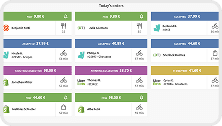
From this observation, Tick’Eat was born: a unified ecosystem designed from the ground up for quick-service restaurants and delivery. The EPOS, online ordering website, self-ordering kiosks, delivery management, inventory, loyalty, kitchen display screens and network management are all built to work together, without relying on an accumulation of disparate components.
One connector instead of countless integrations
One key question remained: how could this ecosystem be connected to delivery platforms without multiplying custom developments and ongoing maintenance?
The answer was HubRise.
"The idea was simple: instead of maintaining several critical integrations, we only maintain one.” — Maxence Pinson, CEO of Tick’Eat.
HubRise handles the complexity of platform integrations: new features, API updates, order synchronisation, catalogue management and the stability of the integration infrastructure with Uber Eats and Deliveroo.
Tick’Eat, meanwhile, retains full ownership of the client relationship. This is the core advantage of the grey-label model: HubRise operates in the background, while the software publisher remains the single point of contact for restaurants.
“My clients don’t need to know HubRise in detail. What they know is that everything is synchronised and that they have a single point of contact: us! HubRise is robust, we know we can fully rely on them.” — Maxence Pinson, CEO of Tick’Eat.
Less maintenance, more product focus
By relying on HubRise for platform integrations, Tick’Eat has been able to focus its resources on what truly creates value for restaurateurs: the product.
This decision has enabled rapid development of the Tick’Eat ecosystem, including:
- a modern EPOS, specifically designed for delivery;
- a fast, fully integrated online ordering website;
- a native loyalty module;
- an internal driver management solution;
- a multi-brand catalogue engine;
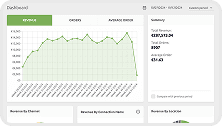
- a network-level dashboard for stores;
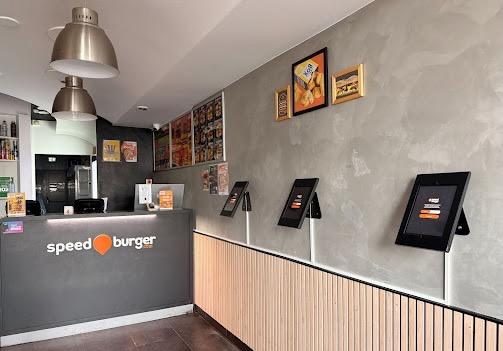
- and soon, self-ordering kiosks integrated into the same system.
Rather than tying up teams with the maintenance of constantly evolving platform APIs, Tick’Eat invests its time in continuously improving the restaurateur experience.
Speed Burger: a pioneering network ready for modernisation
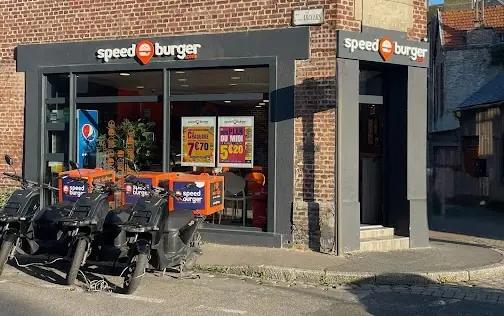
Speed Burger is no newcomer to digital innovation. The brand was among the first in France to offer online ordering with delivery and, as early as the mid-2000s, card payment on delivery.
Today, the network includes:
- 16 restaurants,
- 4 virtual brands,
- in-house delivery drivers,
- around 30% of revenue generated via platforms,
- and 55–60% via the online ordering website.
In such a context, consistency across channels is essential to avoid operational errors and wasted time.
“What we were looking for was real centralisation, without multiplying tools.” — Julien Senegas, Network Manager at Speed Burger.
A progressive and controlled migration
The migration to Tick’Eat was carried out in several phases: a pilot store, followed by a two-wave rollout across the entire network. For a multi-site store, the timeline was ambitious, but the transition took place without any major operational disruption.
Julien sums up the impact of this new organisation very simply:
"My phone doesn’t ring in the evening anymore.” — Julien Senegas, Network Manager at Speed Burger.
This peace of mind is the result of both system stability and close collaboration with the Tick’Eat team.
“In an emergency, Maxence responds very quickly.” — Julien Senegas, Network Manager at Speed Burger.
This responsiveness is made possible as the heaviest and highly critical part, namely the delivery platform integrations, is handled by HubRise Julien explains.
144 catalogues synchronised for a multi-brand network
Speed Burger operates four virtual brands, each deployed on two platforms (Uber Eats and Deliveroo) in every restaurant.
In total, this represents 144 catalogues, all automatically synchronised from Tick’Eat into delivery platforms via HubRise.
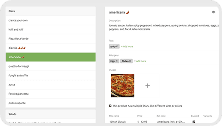
Menu updates, pricing and availability changes are managed from a single interface. Ingredient shortages perfectly illustrate the value of this architecture: each product is linked to its ingredients, making it possible to instantly identify all affected items when a shortage occurs.
“One click, and everything is updated: EPOS, online ordering, platforms. It’s essential when managing several brands and sales channels from a single store.” — Julien Senegas, Network Manager at Speed Burger.
This centralisation prevents oversights, inconsistencies between channels and unnecessary tension in the kitchen.
Tangible benefits for both the software editor and the store
For Tick’Eat, the partnership with HubRise makes it possible to:
- maintain a single integration instead of multiple connectors;
- free up time for product development;
- retain a direct and consistent client relationship;
- and accelerate the pace of innovation.
For Speed Burger, the benefits are just as concrete:
- more stable operations;
- simplified management of catalogues and virtual brands;
- fewer operational errors;
- better multi-site consistency;
- and a significantly reduced maintenance burden.
“We have a faster, smoother website, and everything is centralised.” — Julien Senegas, Network Manager at Speed Burger.
An integration model built to last
The story of Tick’Eat, HubRise and Speed Burger illustrates a increasingly relevant and modern approach in organised food-service: a software editor focused on its product, supported by a single, robust and invisible middleware capable of absorbing the complexity of food delivery platform integrations.
Tick’Eat focuses on the restaurateur experience. HubRise secures critical connections in a grey-label model. Speed Burger benefits from a unified, scalable system that is simpler to operate on a daily basis.
A model that directly addresses the current challenges faced by multi-site stores, from the growth of online orders to the expansion with virtual brands and the need for operational reliability.
Have questions about this blog post?
Whether you're looking for more details about this article or want to find out how HubRise can help your business, we're here for you.